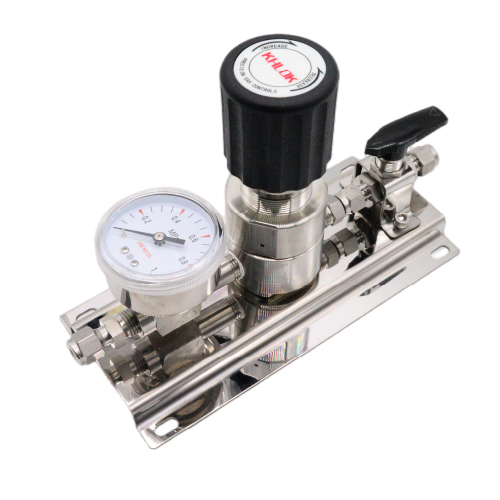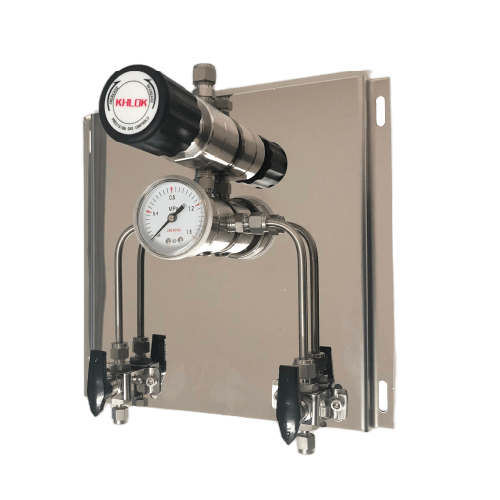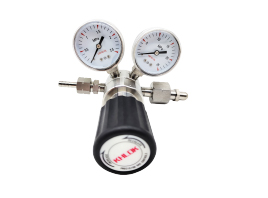
Choosing a gas pressure relief valve for laboratory gas cylinder manifolds depends on three core factors: gas type, working pressure range, and safety certification:
- Gas type matching: Use "non-corrosive gas valves" for inert gases (nitrogen, helium) and "corrosive gas valves" (with PTFE diaphragms) for acidic/alkaline gases (hydrogen chloride, ammonia) to prevent internal component corrosion.
- Pressure range adaptation: Ensure the valve’s inlet pressure matches the gas cylinder pressure (e.g., 0-20MPa for high-pressure cylinders) and the outlet pressure meets lab equipment needs (e.g., 0-0.5MPa for analytical instruments).
- Safety certification: Select valves with CE or ASME certification—they have overpressure protection functions (e.g., built-in rupture discs) that automatically release pressure if the outlet pressure exceeds the safe limit, avoiding equipment damage.